





History of Clan MacLean

The Warriors of the Battle-Axe: History of Clan MacLean
Clan MacLean (Gaelic: Clann MacGilleEathain) is one of the most ancient and distinguished clans of the Scottish Highlands. The name translates to "Son of the Servant of St. John," a reference to their first chief, Gillean of the Battle-Axe (Gillean na Tuaighe). The clan claims a royal lineage stretching back to the 5th century and Loarn mac Erc, a king of Dál Riata. Their ancestry is deeply rooted in the Lorn kindred (Cenél Loairn) of Argyll. In the 13th century, Gillean and his sons fought fiercely against the Vikings at the Battle of Largs (1263), helping to drive the Norsemen out of Scotland and securing their place in history.
The Lords of Duart
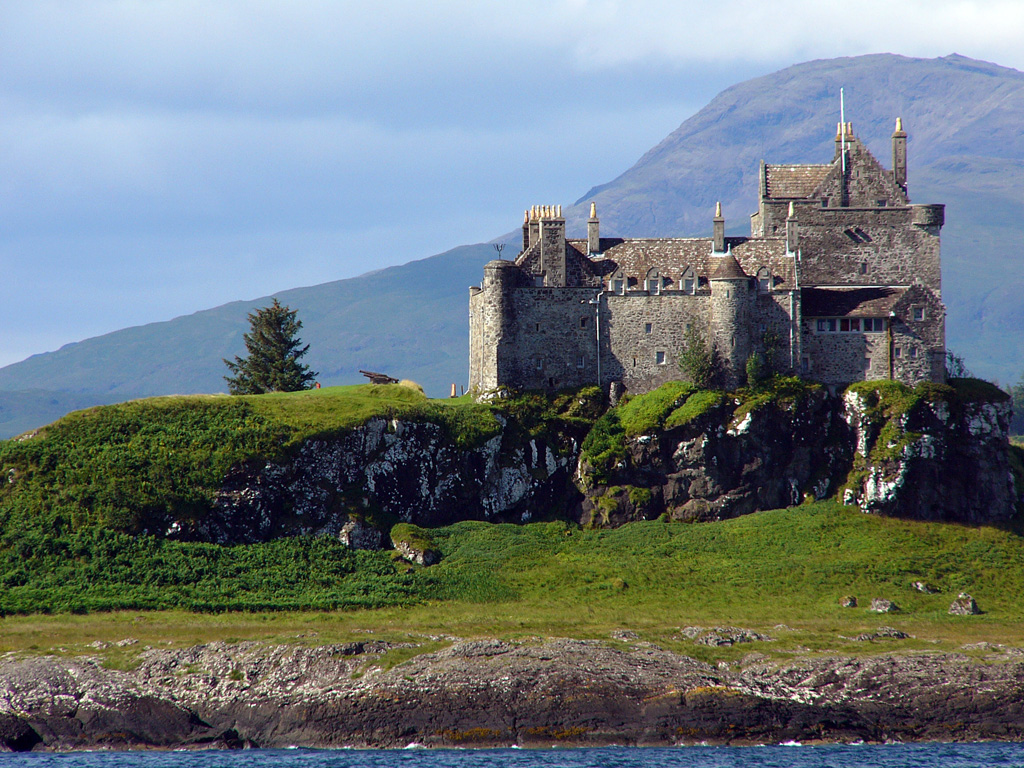
The clan rose to significant power in the 14th century under the leadership of Lachlan Lubanach, a descendant of Gillean. By marrying into the family of the Lord of the Isles, the MacLeans secured vast territories in the Inner Hebrides, particularly on the Isle of Mull. Their stronghold, Duart Castle, stands sentinel on a cliff overlooking the Sound of Mull. For centuries, it was the seat of the MacLean Chiefs, guarding the sea lanes and serving as a base for their formidable navy.
Feuds and The Lady's Rock
The MacLeans were known for their martial prowess but also for their turbulent relationships. A notorious episode involves the 16th-century Chief, Lachlan Cattanach. Unhappy in his marriage to a daughter of the Earl of Argyll (Clan Campbell), he stranded her on a tidal rock (now known as Lady's Rock) in the Sound of Mull, expecting the rising tide to drown her. Miraculously, she was rescued by passing fishermen and returned to her powerful family. The MacLean chief was later assassinated in Edinburgh by his own brother-in-law, the Campbells exacting a bloody revenge. This event cemented the bitter rivalry between the MacLeans and the Campbells.
War with the MacDonalds
The MacLeans were frequently at war with the Clan MacDonald, the most powerful family in the Hebrides. In the late 16th century, Sir Lachlan Mor MacLean fought a brutal war against the MacDonalds of Islay. Following his death at the Battle of Traigh Ghruinneart in 1598, his sons launched a retaliatory massacre on the people of Islay that lasted for three days. These constant wars weakened the clan, allowing the opportunistic Campbells to seize much of the MacLean estate, including Duart Castle, through debt and legal maneuvering in the 17th century.

Restoration and Legacy
Despite losing their lands, the MacLeans remained fiercely loyal Jacobites, fighting for the Stuarts at Killiecrankie, Sheriffmuir, and Culloden. The clan’s modern history is one of triumphant restoration. In 1911, the 26th Chief, Sir Fitzroy Maclean, repurchased the ruins of Duart Castle. He spent decades restoring it to its former glory. Today, Duart Castle is once again the home of the MacLean Chiefs and a gathering place for clansmen from around the world, symbolizing the indestructible spirit of the "Children of Gillean."