





History of Clan MacDonnell

The Epic Saga of Clan MacDonnell: Glengarry and Keppoch
The history of Clan MacDonnell is a dramatic tapestry of royal ambition, ferocious independence, tragic betrayal, and survival. While they are part of the great Clan Donald—the largest of all Highland clans—the MacDonnells of the mainland distinguished themselves by adopting the spelling MacDonnell (or sometimes MacDonell). This spelling is closer to the Gaelic pronunciation of MacDhomhnuill, a symbolic gesture asserting their distinct identity from their island cousins.
Descending from the mighty Lords of the Isles, the MacDonnells split into two powerful houses: the MacDonnells of Glengarry (occupying the Great Glen) and the MacDonnells of Keppoch (holding the lands in Lochaber). Both branches were renowned for their refusal to bow to authority, whether it was the Scottish Crown or rival clans.

Part I: The MacDonnells of Glengarry – The Raven’s Rock
The Strategic Stronghold The Glengarry branch traces its line to Donald, the second son of Reginald, 1st of Clanranald. They settled in the strategic heart of the Highlands, where the River Garry flows through the Great Glen.
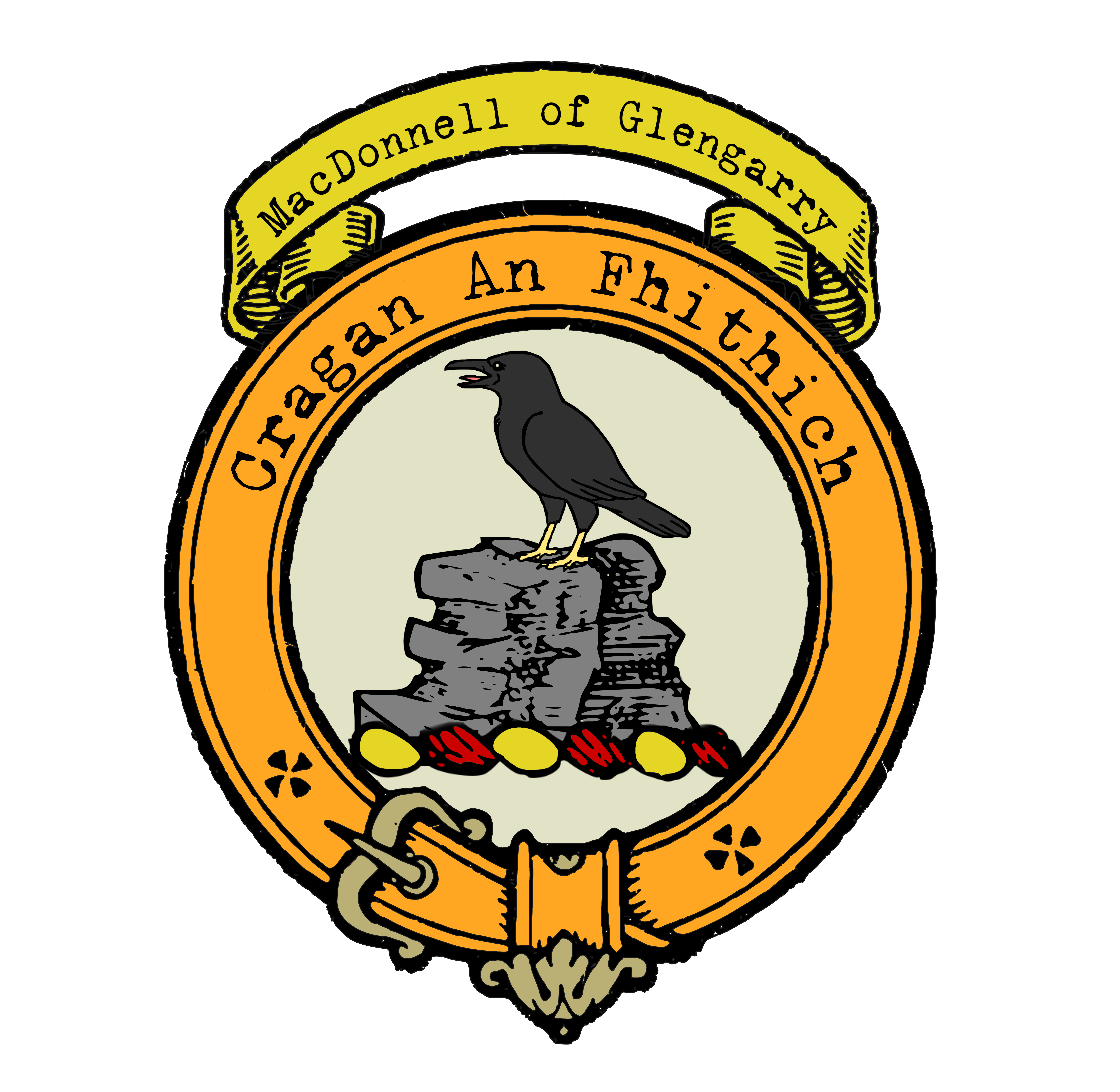
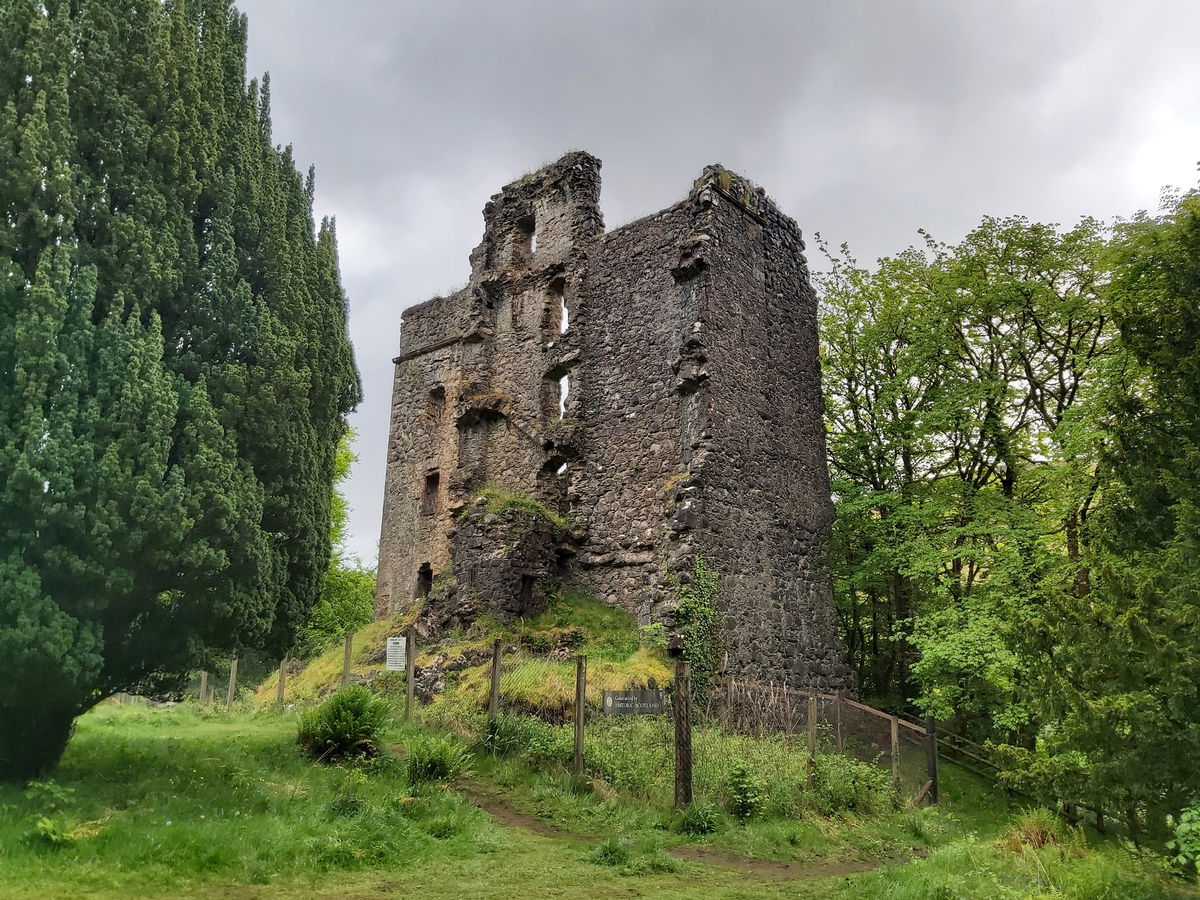
Their power base was Invergarry Castle, a formidable fortress built on the Creagan an Fhithich (The Raven’s Rock) overlooking Loch Oich. This rock gave the clan its famous war cry, "The Raven's Rock," and the raven remains a potent symbol of their vigilance and aggression. For centuries, this castle controlled the main route through the Highlands, making the Glengarry chiefs major players in Scottish politics.
The Era of Fire and Sword The Glengarry MacDonnells were defined by their stubborn resistance to feudal submission. In the 16th century, they engaged in the legendary Battle of the Shirts (Blar na Leine) in 1544. Fighting alongside Clanranald against the Frasers to secure a disputed chiefship, the heat of the day was so oppressive that the warriors discarded their chainmail and plaids, fighting only in their long saffron shirts. It was a carnage that decimated the Fraser nobility, cementing the MacDonnells' reputation for ferocity.
However, their greatest feud was with the Clan Mackenzie of Kintail in the early 1600s. The dispute arose over land in Wester Ross. The Mackenzies, politically savvy, obtained a "Commission of Fire and Sword" from the government, effectively legalizing a war of extermination against the MacDonnells.
-
The Burning of Kilchrist: Tradition holds that during a raid, Glengarry’s piper played a tune now known as "Kilchrist" or "Glengarry's March" while a church full of Mackenzies was burned.
-
The Battle of Morar (1602): The conflict culminated here. While the MacDonnells fought with immense bravery, the sheer resources of the Mackenzies eventually forced Glengarry to relinquish his coastal lands and retreat to the Lochaber heartlands.
Part II: The MacDonnells of Keppoch – The Unconquerable
The "Non-Intercourse" Clan The Keppoch branch descends from Alistair Carrach, a younger son of the Lord of the Isles. Their history is unique because, for nearly 300 years, they held their lands by the sword alone. In 1490, their lands were legally granted to the Chief of Clan MacKintosh by the Crown. The MacDonnells of Keppoch ignored this paper title, refusing to pay rent or acknowledge MacKintosh authority. They became known as "The Non-Intercourse Clan" because they recognized no law but their own.
The Battle of Mulroy (1688) This defiance culminated in the Battle of Mulroy, the last major clan battle fought in Scotland. The MacKintosh Chief, supported by government troops, marched to forcibly evict the Keppoch MacDonnells. Led by the legendary Coll of the Cows (Coll na Ceapach), the MacDonnells smashed the superior MacKintosh force. This victory preserved their independence for another generation.
The Tragedy of the Well of Heads The dark side of clan justice is immortalized at the Well of Heads (Tobair-nan-ceann). In 1663, the young Chief of Keppoch and his brother were brutally murdered by their own cousins in a power struggle. The clan failed to avenge them, so the Chief of Glengarry (acting as clan overlord) sent the famous poet and warrior Iain Lom to exact justice. Iain Lom hunted down the seven murderers, beheaded them, and washed their severed heads in a spring before presenting them to Glengarry at Invergarry Castle. A gruesome monument, erected in 1812, still stands by the roadside today, bearing a Gaelic inscription detailing the event.

Part III: The Jacobite Vanguards
Igniting the 1745 Rising The MacDonnells were the backbone of the Jacobite cause. In fact, the 1745 Rising started with them. Before Prince Charlie even raised his standard, the Highbridge Skirmish took place. Major Donald MacDonald of Tir nan dris (a Keppoch cadet), commanding a mere 11 men and a piper, ambushed two companies of government soldiers (over 80 men). By leaping about the rocks and using the bagpipes to simulate a large force, they terrified the soldiers into retreating. The soldiers ran straight into a trap set by the MacDonnells of Glengarry. Surrounded and outmaneuvered by the two MacDonnell branches, the government troops surrendered. It was a brilliant, bloodless victory that electrified the Highlands.
The Horror of Culloden The glory ended on the moor of Culloden in 1746.
-
Keppoch’s Death: The Chief of Keppoch, Alexander MacDonnell, was a man of immense honor. When the order to charge was delayed and the clans were being decimated by cannon fire, tradition says the MacDonald regiments hesitated, feeling insulted by their position on the left wing. Keppoch, refusing to stand still, charged forward alone, crying out, "My God, have the children of my tribe forsaken me?" He was cut down by musket fire—a hero to the end.
-
The Burning: Following the defeat, the "Butcher" Duke of Cumberland ordered the systematic destruction of MacDonnell lands. Invergarry Castle was blown up and burned, leaving the "Raven's Rock" a blackened ruin.

Part IV: The Paradox of the 19th Century
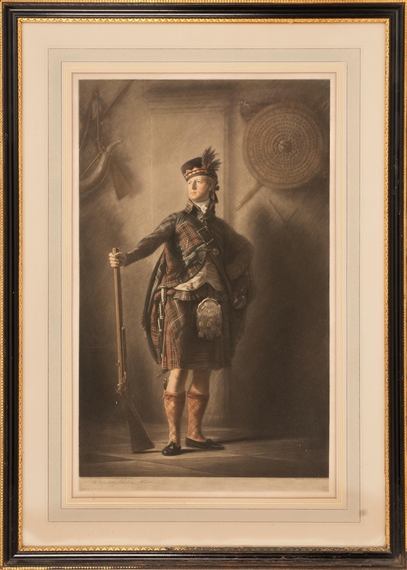
The Last Highland Chief In the aftermath of the Jacobite defeat, the clan faced a new enemy: economics. The 15th Chief of Glengarry, Colonel Alexander Ranaldson MacDonnell (1773–1828), is one of the most controversial figures in Scottish history. He was the inspiration for Fergus Mac-Ivor in Sir Walter Scott’s Waverley. A flamboyant traditionalist, he always traveled with a retinue of armed henchmen and a personal bard. He famously invented the Glengarry Bonnet (the boat-shaped military cap still worn today).
However, Colonel Glengarry was a paradox. While he posed as the "last true Highland Chief" at King George IV's visit to Edinburgh in 1822, he was simultaneously evicting his own loyal clansmen to clear the land for sheep farming. He prized the image of the clan, but sacrificed the people of the clan.
The Exodus and Father MacDonnell As the Highland Clearances ravaged Glengarry and Keppoch lands, thousands of MacDonnells were left destitute. A savior emerged in the form of Father Alexander MacDonnell, a warrior-priest. He organized the displaced men into the "Glengarry Fencibles," a British army regiment, to give them employment and dignity. When the regiment was disbanded, Father MacDonnell negotiated with the government to secure land in Canada. He led his people across the Atlantic to found Glengarry County in Ontario. There, they preserved their Gaelic language, Catholic faith, and fiddle music, creating a "New Scotland" that arguably remained more traditional than the old one they left behind.
A Modern Legacy The martial spirit of the MacDonnells survived into the 20th century. Air Commodore Donald MacDonnell, the 22nd Chief of Glengarry, was a decorated Battle of Britain fighter ace. He led No. 64 Squadron against the Luftwaffe, scoring 11½ aerial victories before being shot down over France.
Today, the Chiefs of Glengarry and Keppoch are once again recognized figures. The clan stands as a testament to resilience—surviving the fires of Invergarry, the tragedy of Culloden, and the betrayal of the Clearances to flourish across the globe.