





History of Clan MacGill

The Legal and Noble History of Clan MacGill
The history of Clan MacGill is a fascinating journey from the rugged coast of Galloway to the highest courts of Edinburgh. The surname is derived from the Gaelic Mac an ghoill, meaning "Son of the Lowlander" or "Son of the Stranger." This suggests the family may have originated as strangers in a Gaelic-speaking area, possibly of Norse or Lowland descent.
The name was well-established in the southwest of Scotland by the 13th century. The earliest recorded ancestor is Maurice Macgeil, who appears in historical records in 1231 as a witness to a charter by Maldouen, Earl of Lennox, granting lands to the Church of St Thomas the Martyr in Arbroath. From these early roots, the clan would rise to become powerful lawyers, politicians, and peers of the realm.

The Rise of the Lords of Session
By the 16th century, the focus of the clan shifted from Galloway to Edinburgh and Fife. James Makgill, a prominent merchant and Provost of Edinburgh during the reign of King James V, laid the foundation for the family's ascent. He was an early adopter of the Protestant Reformation, a stance that would define the family's political alliances.
His eldest son, Sir James Makgill, purchased the estate of Nether Rankeillour in Fife. A brilliant legal mind, he studied law at Edinburgh and was appointed a Lord of Session in 1554, taking the judicial title Lord Rankeillor. He was a close friend and supporter of the fiery reformer John Knox, placing the clan firmly at the center of the religious and political storms engulfing Scotland.

Murder and Intrigue: The Mary Queen of Scots Era
The most dramatic chapter in the clan’s history involves Lord Rankeillor and his complex relationship with Mary, Queen of Scots. When Mary returned from France in 1561, Rankeillor served as one of her Privy Councillors. However, the Protestant lords grew increasingly jealous of the Queen's Catholic private secretary, David Rizzio.
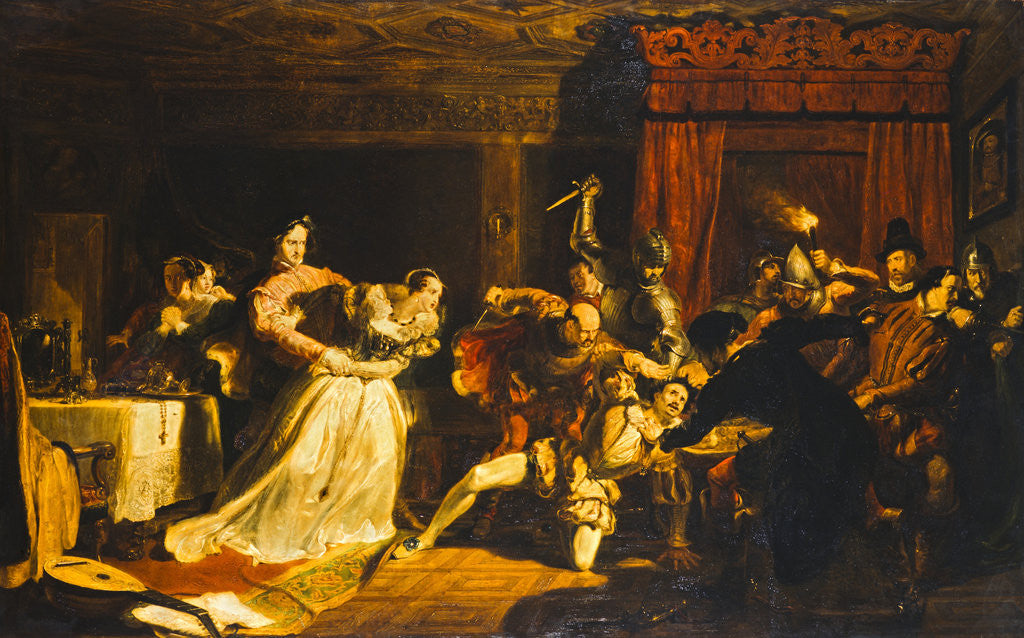
On the night of March 9, 1566, a group of conspirators burst into the Queen’s private apartments at Holyrood Palace. In a brutal act of political violence, they dragged Rizzio from the pregnant Queen’s side and stabbed him to death. Sir James Makgill was heavily implicated in this plot. When Queen Mary regained control, Makgill was stripped of his judicial rank and forced to flee Edinburgh in disgrace.
He was later pardoned but ordered to remain north of the River Tay. However, following Mary's forced abdication, Makgill returned to power under the Regent Moray. He served as an Ambassador to the court of Queen Elizabeth I in 1571. Tragically, his political life came at a terrible personal cost; during his absence in London, supporters of the exiled Queen Mary attacked his house in Edinburgh, murdering his wife. Lord Rankeillor died in 1579, leaving a legacy of brilliance and bloodshed.
The Viscounts of Oxfuird
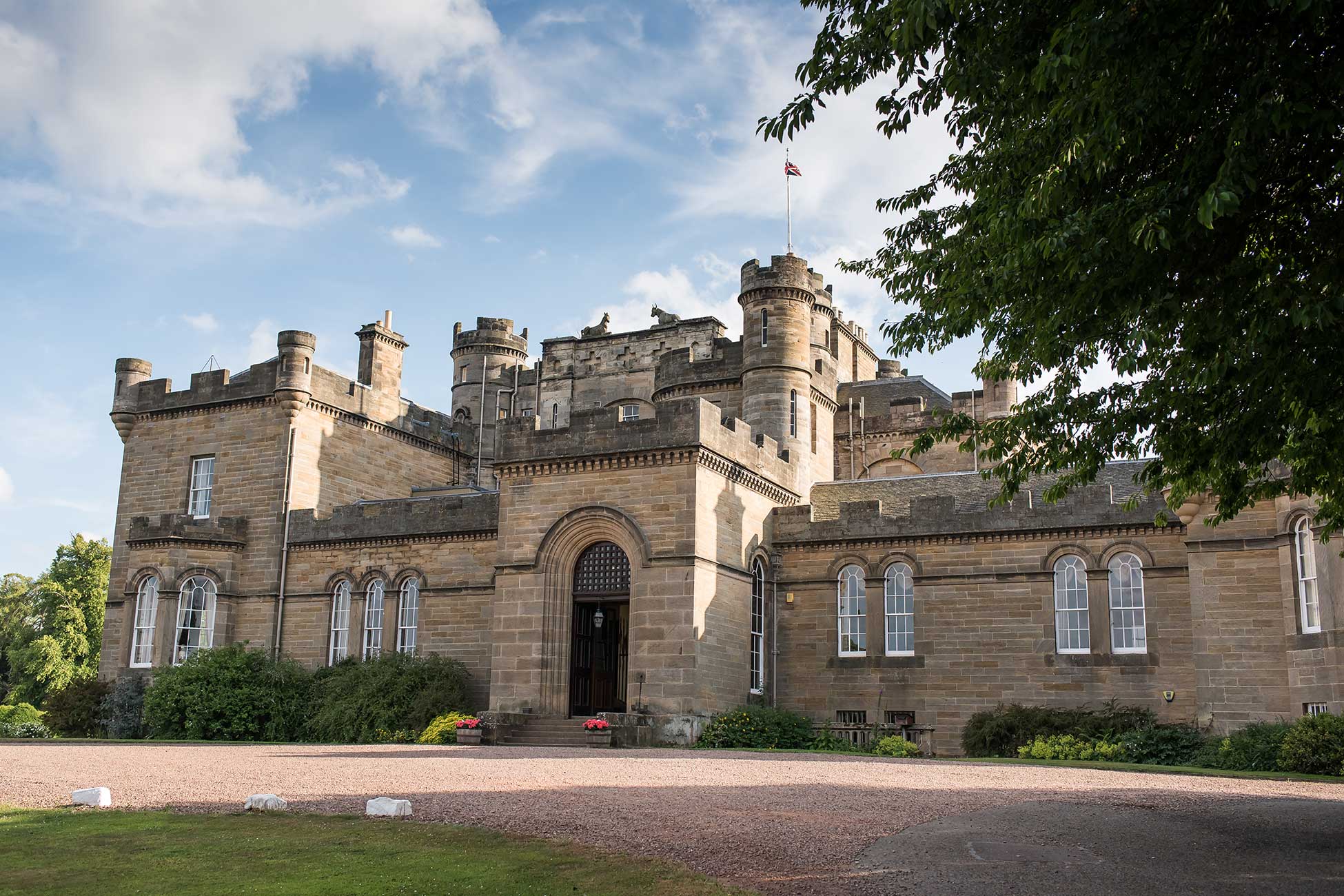
Succession passed to the younger line of Cranston-Riddell. David Makgill, brother of Lord Rankeillor, served as Lord Advocate of Scotland. The family continued to climb the social ladder, acquiring the estate of Oxenfoord Castle.
In 1651, the family reached the height of its power. Sir James Makgill (great-grandson of the Lord Advocate) was elevated to the peerage by King Charles II, becoming the 1st Viscount of Oxfuird and Lord Makgill of Cousland. This cemented the Makgills as one of the premier noble families of the Lowlands. However, the title would soon face a crisis.
The Dormancy and the Succession Crisis
Robert Makgill, the 2nd Viscount Oxfuird, faced a tragic dilemma. His son and heir, Thomas, died in 1701, five years before Robert himself passed away in 1706. This left the title without a direct male heir.
What followed was a legal battle that lasted centuries.
-
The Maitland Claim: Christian Makgill, the Viscount's eldest daughter, married a son of the Earl of Lauderdale. Her son, William Maitland, claimed the title.
-
The Makgill Claim: James Makgill of Nether-Rankeillor, a distant cousin from the original senior line, challenged this, claiming the title should pass to the nearest male heir ("heir male") rather than through a female line ("heir of line").
In 1734, the House of Lords refused to rule in favor of either claimant, and the Viscountcy became dormant. The estates passed to the Maitlands, who adopted the name Maitland Makgill Crichton, continuing the bloodline if not the title.

Modern Revival and the Clans of the West
While the noble Makgills fought in courts, other branches of the clan lived very different lives in the Highlands. On the island of Jura, a family known as Clann a' ghoill flourished, and in Kintyre, MacGills were loyal followers of Clan MacMillan.
The noble title remained sleeping until the late 20th century. In a historic ruling in 1986, the Lord Lyon King of Arms recognized George Hubbard Makgill as the 13th Viscount of Oxfuird and Chief of the Name and Arms of Makgill. After more than 250 years of dormancy, the clan once again had a confirmed Chief.
Today, the MacGills and Makgills are united under their revived leadership, honoring a history that spans from the humble "strangers" of Galloway to the Lords of Session and Viscounts of the realm.