





History of Clan MacDowall

The Illustrious History of Clan MacDowall
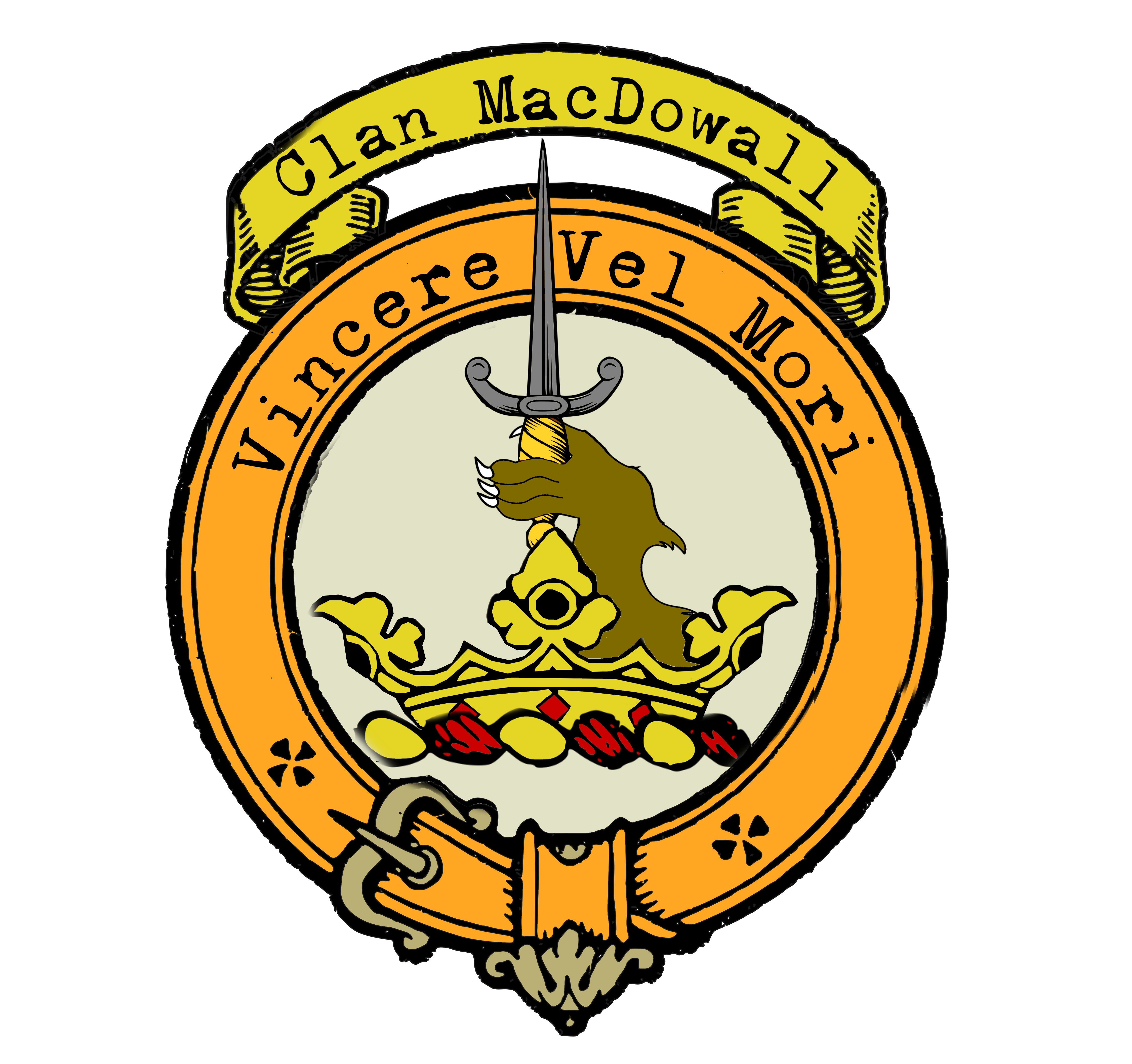
The history of Clan MacDowall is the history of Galloway itself. The name MacDowall (and its variants) descends from the ancient Lords of Galloway, a powerful dynasty that ruled southwest Scotland almost as independent kings. The clan traces its lineage to Gille, a native Governor of the Western Isles under Norse rule around the year 1000. Gille was the great-grandfather of Fergus of Galloway and also an ancestor of Somerled, linking the MacDowalls to the royal blood of the Isles.
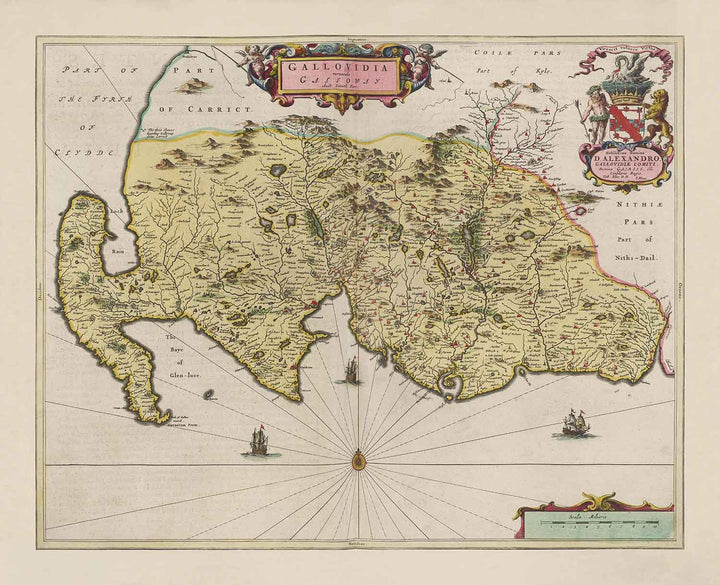
Fergus and the Origins (1096–1185) Fergus of Galloway (1096–1161) is the patriarch of the line. Trained in the court of Henry I of England, he assumed the Lordship of Galloway and ruled a quasi-independent realm coveted by both Scotland and England. Around 1124, he married Elizabeth, an illegitimate daughter of King Henry I. Their grandson, Duegald (killed in 1185), is the eponym of the clan. His descendants used the patronymic "Macdougall" until the late 13th century. It was only after 1292 that the spelling shifted to "Macdowall" (pronounced Macdouall) to distinguish them from the Highland MacDougalls of Argyll.
Wars of Independence and The Bruce Feud In 1292, Duegald’s successors, Dougal of Gairachloyne and his brother Fergus, swore fealty to King Edward I of England by signing the "Ragman Roll." Their names appear as Macdowyl and Macdowald. In 1295, Dougal received a charter for the lands of Garthland, Logan, and Elrig from his cousin, King John Balliol.
This allegiance to the Balliol dynasty placed the MacDowalls on a collision course with Robert the Bruce. Following Bruce's invasion of Galloway in 1306, the MacDowalls led the defense of the province for fifty years. However, allegiances eventually shifted; by 1347, the MacDowall Chief was fighting alongside King David II (Bruce's son) and was captured with him by the English. In 1402, Sir Fergus MacDowall of Garthland was captured at the Battle of Homildon Hill, continuing the clan's martial tradition.
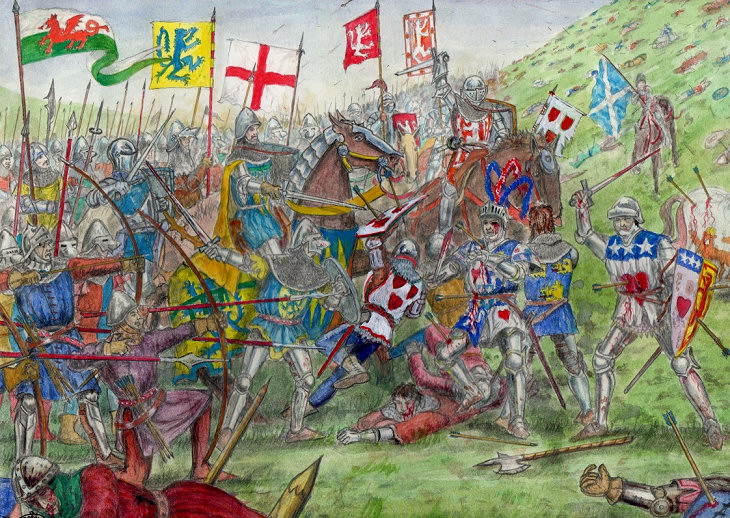
Sacrifice at Flodden and Pinkie The 16th century was a time of great sacrifice. At the disastrous Battle of Flodden in 1513, the Chief Uchtred MacDowall, along with Charles McDouall of Logan, Gilbert MacDowall of Freugh, and most of their male kin, were killed fighting alongside King James IV. Decades later, in 1547, the next generation—John MacDowall of Garthland and Fergus McDouall of Freugh—fell at the Battle of Pinkie. Despite these losses, the clan endured. In 1582, the new Chief Uchtred was involved in the "Ruthven Raid" against King James VI but later reconciled with the monarch.
17th Century: Royalists and Records In 1613, Sir John MacDowall petitioned for the restoration of the Lordship of Galloway. His son, Sir James, was a staunch Royalist during the Civil War, raising men to suppress the Irish Rebellion and attempting to relieve Charles I at Newark in 1647. Tragically, much of the clan's written history was lost during this turbulent era. The archives were destroyed in the burning of Balzieland Tower (1500), the pillage of Freugh (1679), and the fire at Preston Hall (1686).
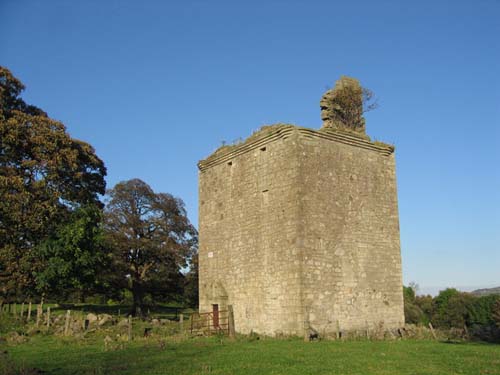
Global Expansion and Modern Revival The 18th and 19th centuries saw the MacDowalls expand globally. Colonel William MacDowall of Castlesemple brought the West Indian sugar trade to Scotland in 1725. His descendants included Members of Parliament, Generals in India, and pioneers in Canada who helped suppress the Riel Rebellion.
The Chiefship was revived in 1987 when Professor Fergus Day Hort MacDowall, a Canadian scientist, re-matriculated his Arms at the Lyon Court as the Laird of Garthland and Chief of the Name and Arms of MacDowall. He designated the official spelling as "Clan MacDowall" to honor the majority of modern clansmen. Today, the clan unites MacDowalls, McDowells, and Doyles across the world.