





History of Clan MacKinnon

The Royal Heritage of Clan MacKinnon
Clan MacKinnon (Gaelic: Clann MhicFhionghain) is one of the seven clans of the Siol Alpin, claiming direct descent from Alpin, father of Kenneth MacAlpin, the first King of Scots. Their motto, Cuimhnich Bàs Ailpein ("Remember the Death of Alpin"), is a constant reminder of this royal lineage. The clan takes its name from Fingon, meaning "Fair Born" or "Fair Son," a 12th-century ancestor.
Originally, the clan held extensive lands on the islands of Mull and Skye. They were closely associated with the Abbots of Iona, with several MacKinnon chiefs serving as abbots of the sacred monastery, underscoring their deep spiritual and political influence in the 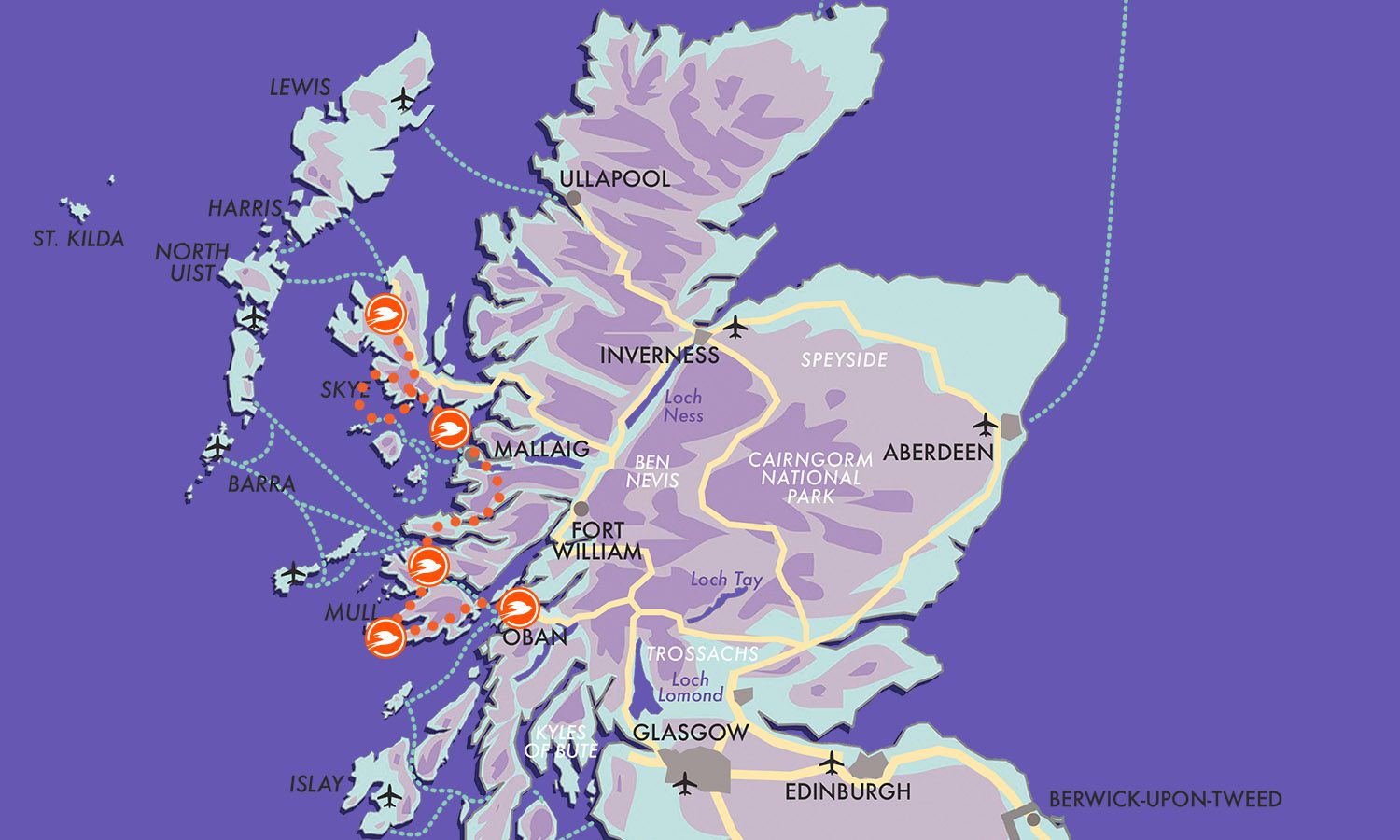
Castles and Legends: Saucy Mary
The clan’s most famous stronghold is Caisteal Maol (Castle Moil), situated on a promontory near Kyleakin on Skye. According to legend, this castle was built by a Norwegian princess known as "Saucy Mary," who married an early MacKinnon chief. To ensure no ship passed through the narrow sound without paying dues, she reputedly stretched a massive iron chain across the kyle to the mainland. Ships had to pay their toll to pass or risk destruction. On her death, she was buried on top of Beinn na Caillich ("The Mountain of the Old Woman") so she could face her native Norway forever.

Feuds and the Pine Tree Stratagem
Like many Highland clans, the MacKinnons had long-standing feuds, particularly with their neighbors, the MacLeans. However, they were known for their cleverness as much as their swordsmanship. On one famous occasion, the MacLeans captured MacKinnon lands on Mull and held a drunken victory feast. While the MacLeans slept in a stupor, the MacKinnon chief and his men crept into the hall. Instead of slaughtering them, they cut fir trees (the MacKinnon plant badge) and placed one beside each sleeping MacLean. When the MacLeans awoke to find themselves surrounded by the symbol of their enemy, they realized they could have been killed instantly. Shamed and terrified by this display of mercy and stealth, they withdrew from the lands immediately.

Jacobite Loyalty and the Prince’s Escape
The MacKinnons were fiercely loyal to the House of Stuart. They fought in the Civil Wars for Charles I and raised men for the Jacobite Risings of 1715 and 1745. Following the disaster at Culloden in 1746, the clan played a critical role in saving Bonnie Prince Charlie. The Chief, Iain Og MacKinnon, though over 70 years old, personally sheltered the fugitive Prince in a cave and aided his escape to the mainland. For this loyalty, the Chief was captured and imprisoned on a prison ship for four years. When the Attorney General asked him what he would do if King George were in his power, the defiant old Chief replied: "I would do to him as he has this day done to me; I would send him back to his own country."
 Loss and Revival
Because of their support for the Jacobites, the MacKinnon chiefs lost the last of their ancestral lands in 1765. The direct male line of the Chiefship died out in 1808, and the title passed to a cadet branch. Today, the clan is led by Madam Anne Gunhild Mackinnon of Mackinnon, the 38th Chief. The clan society remains active globally, celebrating the heritage of the "Fair Born" sons of Alpin.